Tuesday, February 23, 2021

Skim Deep


A super fun Hard Case Crime written by Max Allan Collins. I don't know why I haven't read more of Collins's books, I always enjoy them. 

At any rate, Nolan has retired from the biz (hit man, robbery, all around general bad guy) and asked his long time girlfriend Sherry to marry him. They go to Las Vegas to tie the knot, and end up getting unwittingly involved in a plot to skim money off the top of a mobbed up casino. The actual perpetrators of the crime want to frame Nolan, but Nolan has other ideas. 

Once he extracts himself and his new bride from that mess, they head home and discover the brother of a guy Nolan killed is out for revenge. Unfortunately for him, he's a bit of a bumbler and Nolan has no trouble neutralizing the threat. 


Monday, February 22, 2021

Jane Eyre; Moonflower Murders


My friend was telling me "Jane Eyre" was one of her favorite books. I was pretty sure I had read it before (I remembered the crazy wife being locked in the attic, etc.) but I didn't remember the particulars. I started reading it and none of it sounded the least bit familiar, so I started to think maybe I hadn't read it before. I got about 2/3 of the way through it and came to a scene that was very vivid in my mind, so I think I did read it at some point when I was younger and just didn't remember it that well. At any rate, I enjoyed it. If you don't know the story: Jane Eyre is an orphan whose mean aunt sends her to a charity boarding school. It's pretty bad when Jane first gets there, but eventually conditions improve and Jane is able to get through school and teach for a few years before applying for a job as a governess. She travels to Thornfield Hall and meets Mr. Rochester, the guardian to little Adele. Despite Jane describing him as "ugly", it's clear from the get go that the two of them are attracted to each other. There is an odd woman living in the house, Mrs. Poole, who is apparently a seamstress, but Jane pays her no mind. Someone lights Mr. Rochester's bed on fire one night, and then one of his guests is mysteriously attacked. Nevertheless, when Mr. Rochester proposes, Jane accepts. At the altar, a surprise guest shows up to stop the whole thing. It turns out Mr. Rochester is already married, and his crazy wife is locked up in the attic at Thornfield. Jane flees and ends up finding a lovely family who take her in (this was the scene I remembered so vividly). Eventually Mr. Rochester and Jane find their way back to each other and it was a lovely happy ending.

EDIT: Hahaha, I was feeling nostalgic so I was rereading some of my old posts about books I read in 2007 and I totally read "Jane Eyre". I even blogged about it! Too funny. 

I'm glad I read the "Magpie Murders" first. I actually liked "Magpie" much better, although this one was good, too. I just felt the whole book within a book thing worked better the first time around, this time it felt really forced.
Former editor Susan is living in Crete with her boyfriend when she is visited by the Trehernes. They used to run a hotel in England and eventually their daughters took it over. Alan Conway, the author of the Atticus Pund books that Susan used to edit, stayed at their hotel not long after one of their guests was brutally murdered. The police blamed the murder on one of the hotel employees, who is currently in prison, but their daughter Cecily thinks Alan knew who the real killer was and wrote about it in his third Pund book, "Atticus Pund Takes the Case". Cecily told her parents she had figured it out--and now she's vanished. The Trehernes ask Susan to investigate, figuring she knew Alan better than anyone else. Susan accepts and goes to their hotel, where she re-reads the Atticus Pund book (and then we get to read it, too) about a former wealthy American movie star who is brutally murdered in her own home in the 1950s. There are plenty of suspects, but Atticus is able to figure it out. Of course after re-reading it Susan is totally perplexed as to how the book is related to the hotel murder. They're completely separate types of murders that bear no resemblance to each other. Horowitz was able to tie it all together very nicely with plenty of red herrings that kept me guessing. 


Monday, February 8, 2021

And Then There Were None; Magpie Murders

One of my friends at work told me this is her favorite Agatha Christie book. I knew I had read it, and remembered the basic plot, but couldn't remember the ending, so I reread it. 
Ten people of various backgrounds are lured to Indian Island under false pretenses. When they get there, they are all accused of murder by an anonymous voice on a record. It kind of reminds me of the movie "Clue", which I'm sure borrowed from Christie. At any rate, one by one the guests are murdered in ways that coincide with a nursery rhyme hung up in each room, "The Ten Little Indians" (which was the original title of this book). The remaining guest become very suspicious and wary of each other, but the murders continue until everyone is dead. The ending was very clever, typical of Christie's books. 


I put the second book in this series, "Moonflower Murders", on hold, not realizing that "Magpie Murders" came first. I'm glad I decided to read it first, I think I would have been a little lost if I hadn't. 

It was a mystery within a mystery, and very cleverly done, too. The book starts out with Susan, who is an editor for Cloverleaf books, reading the latest manuscript from an author named Alan Conway called "Magpie Murders". We the reader also get to read the manuscript. It was a very charming mystery set in a quaint English village in 1955, starring Conway's signature detective, Atticus Pund. 200+ pages later, Pund announces he has solved the mystery and we turn the page only to discover the last chapter of the manuscript is missing. Susan is understandably annoyed, as are we the readers. Then she hears the news: Conway is dead, apparently by suicide. She tells her boss that she's going to try to find the missing chapter so they can still publish the book, so she travels to his house and talks to everyone in his life only to discover that many of them don't believe Alan committed suicide but was actually murdered. At this point we need a scorecard to keep track of everything: Susan is trying to determine if Alan was murdered and also where the last pages of the manuscript went so we can find out who the murder was in "Magpie Murders". I love Horowitz, all of his books have been so well written. 

Monday, February 1, 2021

The Last Days of John Lennon; The Thin Man

When I was around 15, I became obsessed with the Beatles. Listened to everything, watched everything, read everything. I read this one even though I knew I probably wouldn't like it (I didn't) because I was curious what Patterson's stable of writers would have to say. As it turns out, not much. 

First of all, the title is misleading. The book covered John's entire life (good thing, too, otherwise the book would have been very short). No real new information in it, the most I can say is at least the chapters were short. If you're looking for a really good book about John Lennon's final years, check out Fred Seaman's "The Last Days of John Lennon". Fred was John's personal assistant the last few years of his life and describes how miserable John was not making music and how excited he was to finally be creating again when he and Yoko made their last album, "Double Fantasy". It was fascinating. 


A few years ago, I watched the first few Thin Man movies starring William Powell and Myrna Loy and enjoyed the heck out of them. I tried to read Dashiell Hammett when I was in college and didn't particularly care for him, but since I found the movies so charming I thought I would give "The Thin Man" a chance. It was pretty good, I think I might have just been a little too young to appreciate his writing style. Maybe I'll try to read "The Maltese Falcon" again someday. 

"The Thin Man" stars Nick and Nora Charles, a wealthy couple who spend their days and nights drinking and going to clubs. Nick used to be a private detective, and was a darn good one. He and Nora come back to New York on vacation (they live in San Francisco) and Nick becomes involved in a murder mystery involving an old acquaintance of his, eccentric inventor Richard Wynant. Wynant is the main suspect in the murder of his former girlfriend and secretary, Julia. There's a whole cast of shady characters and high society folks who act worse than the gangsters do. It was a pretty good book, but I must say, I really liked the movie better. 

Wednesday, January 20, 2021

Margaret Thatcher


After watching season four of "The Crown" a few months ago, I was so moved by Gillian Anderson's performance of Margaret Thatcher that I decided to read a book about her and subsequently picked the biggest brick of a biography in the library and have been slogging through it since November. 

Not that I didn't enjoy it. I certainly did. British politics is not my strongest subject, however, so I spent a lot of time going "huh?". Still, it was worth it. I'm not in any hurry to dive into the second volume of this two part series though :)

Tuesday, January 19, 2021

Prince Philip Revealed; Fire Cannot Kill a Dragon

First up, a fun biography about Prince Philip, who turns 100 this June. It's mind boggling to me to think about being 100 years old. It wasn't a traditional biography in the chronological sense. Rather, it talked about how his early years and schooling influenced him. He had to be self-sufficient and spent a lot of years fending for himself. He tends to get frustrated with people who whine and complain and he's disappointed that his children and grandchildren have a different perspective on royalty. I can totally understand that. She also made a really good point about how he's been accused of having affairs but no one has ever come forward with a single shred of proof of any kind. After all these years, you think there would have been something (I for one never believe he did cheat on the Queen in the physical sense. I'm sure he flirted and things like that, but I really think he's very loyal to her and wouldn't do such a thing). 

"Fire Cannot Kill a Dragon" was written by a journalist, James Hibberd, who had an inside look at the show by being on set from day one. He interviewed a lot of the cast and crew and divided it up by seasons. It was a really fascinating look at the hit show. Of course he interviewed Dan and David (the showrunners who screwed it all up) and they insisted they always planned to end the show after season 7. HBO wanted more, and they compromised on season 8. They (and everyone else interviewed) insisted that the last few seasons weren't "rushed" (yes they were) and that the quality and story was just as good as the early years (no, they weren't). Everyone made excuses for the shoddy ending by saying it couldn't have ended any other way, really (yes, it could have. I could give you 15 different endings right now off the top of my head that would have made more sense). Hibberd says that at the last Comic-Con the cast attended the crowd cheered and cheered, so clearly the ending wasn't *that* bad. The crowd cheered because the actors did the best they could with the shit material they were given to work with. I don't blame them at all. Most people I've talked to don't. We know where the blame lies. 

At any rate, I'm looking forward to the prequel that should be coming on next year about the Targaryens. They've case Matt Smith, who, ironically enough, played Prince Philip in seasons 1 & 2 of "The Crown". Excellent choice! You know who else would be good at that show? Alexander Skarsgard. What has he been up to since "True Blood" ended? Oh, and Charlie Hunnam from "Sons of Anarchy". 

Seriously, they should just hire me to cast it :)

Monday, January 4, 2021

The Cousins; In League with Sherlock Holmes; The Astonishing Life of August March; A Rose for the Crown; The Brothers York

Bet you can't guess what I spent my long weekend doing! :)

First up, Karen McManus's "The Cousins". Her books are always so much fun, with terrific twists. Even though I guessed the end to this one well in advance, it was still a good ride.

Twenty-four years earlier, the four Story siblings each got a letter from their mother, saying "You know what you did". Subsequent attempts to contact her have failed, and all four siblings insist they have no idea what they did to make their mother cut them off so completely and abruptly. Then one day each of the three grandchildren get a letter from their grandmother, inviting them to spend the summer at her exclusive resort. The cousins don't really know each other that well, but they can't pass up the opportunity to meet their grandmother and potentially find out why she cut their parents out of her life. Of course it helps that grandma is worth a ton of money and the grandkids would like their share. Once they get to the island, though, they discover that not only did their grandmother not invite them, she's really unhappy they are there and will do anything to get them to leave. 


"In League with Sherlock Holmes" wasn't what I was expecting. Most of the stories didn't feature the great detective at all, they were Sherlock adjacent, as it were (one of them was about Benedict Cumberbatch, for instance). Some were pretty funny, like the one about Irene Adler's great-great-granddaughter solving a murder on the Jersey Shore to clear her BFF's name, or the serial killer who thinks he's Sherlock. Some were just kind of blah, which is par for the course with any collection of short stories.  
"The Astonishing Life of August March" was whimsical (which isn't a word I use often enough). August was born in a theater (literally: his mother was an actress who gave birth to him in between acts of a play she was performing and left him in the laundry basket). The aged laundress, Eugenia Butler, raises him (sort of, honestly August raises himself) at the theater, where his education consists of watching great plays night after night. When the theater is torn down August is tossed to the streets to make his own way in life. It was a charming little story. 
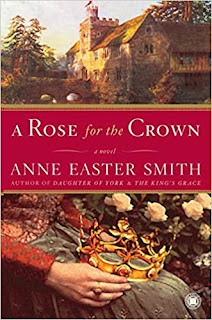


"A Rose for the Crown" by Anne Easter Smith was wonderful, I thoroughly enjoyed it. It's a fictionalized account of Richard III's mistress, the mother of his acknowledged illegitimate children, Katherine and John. Nothing is known about who this woman (or women) was in real life, so Smith has license to make up her story. Kate Haute was born on a poor peasant farm, but has the beauty, grace, and charm to be noticed by a minorly important cousin, Richard Haute. Richard arranges for Kate to come and live with him and his wife and his daughter, Anne, who is Kate's age. Kate learns how to be a gentlewoman and is eventually married: first to an old merchant who leaves her a young, well off widow, then to a cousin named George Haute. Kate is very much taken with George's attractiveness, but quickly discovers he prefers men to women and their marriage becomes a disappointing sham. Kate wants to be loved and have children. She has the good fortune to meet fifteen year old Richard Plantagenet while he's out hawking one day and the two fall for each other and quickly become lovers. It was sweet and romantic and I cried at the end when Richard died. My only quibble (and it's a very small one, but still) is that she has Kate go visit Richard shortly after his wife, Queen Anne, dies, and mentions how he looks much older than his 31 years. He was 32, actually, something Smith, as a Ricardian, should have known or at least verified. 

And finally, "The Brothers York" by Thomas Penn. I was really looking forward to this one because of course anything new about Richard III is exciting. 

Unfortunately, he relied on historians who have been discredited and are considered very biased towards the Tudors, like Thomas More and Polydore Vergil. He tried to make out like the three York brothers: Edward, George, and Richard; were somehow quite unusual for how they fought with each other and tussled over everything. They were in fact very much a product of their times. He contradicted himself quite a bit once Richard became king, talking about how greedy he was and how he wanted to usurp the crown so badly he murdered his nephews, and in the next sentence how being king was such a burden it weighed him down. He called Henry Tudor's marriage to the former Princess Elizabeth "a true union" but Richard was all too glad to get rid of Queen Anne and was eager to marry Elizabeth himself (utter rot and nonsense, of course). Not to mention the little errors that grated on me a bit: called the coronation feast the "wedding" feast, etc. There are much better, fairer, books about Richard and his brothers out there.